
Introduction
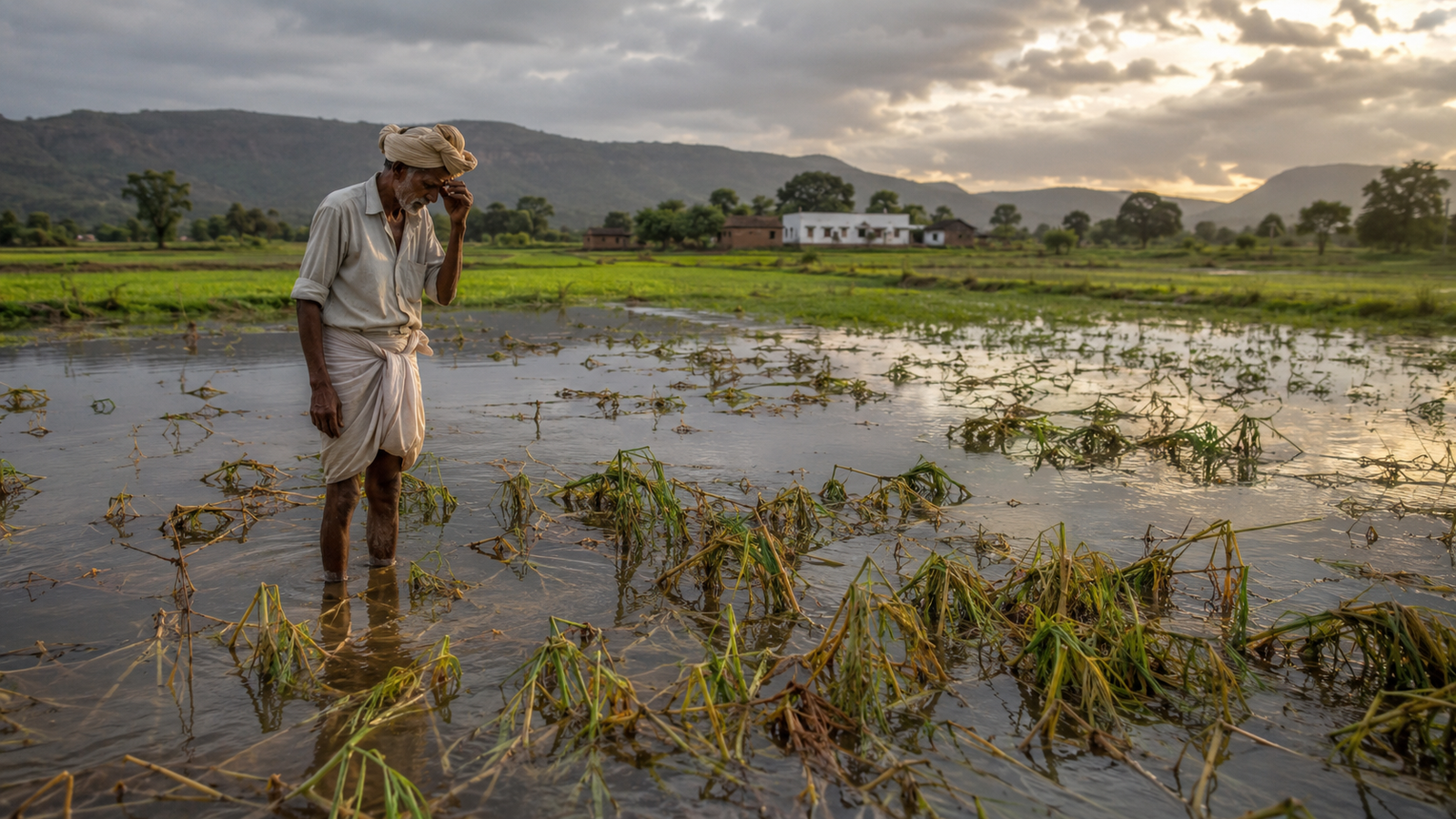
Waterlogging is one of the most persistent and damaging problems faced by farmers across the world, particularly in countries with monsoon-dependent agriculture like India. When excess water accumulates in the root zone of crops for an extended period, it creates conditions that are extremely harmful to plant growth, soil health, and overall farm productivity. This comprehensive guide explores every dimension of waterlogging, from its root causes to long-term solutions that can help farmers protect their livelihoods.
This article is divided into four detailed parts, each covering a specific aspect of the waterlogging crisis: understanding the phenomenon, its impact on farmers, real-world case studies, and actionable solutions.
Part 1: Understanding Waterlogging – Definition, Causes, and Science
What is Waterlogging?
Waterlogging refers to a condition in which the soil becomes saturated with water to the point where there is little or no air space left in the root zone. This saturation prevents oxygen from reaching plant roots, which is essential for respiration and nutrient absorption. Waterlogging typically occurs when the rate of water input, whether from rainfall, irrigation, or flooding, exceeds the soil’s natural drainage capacity.
Unlike temporary flooding, which may recede within hours, waterlogging can persist for days or even weeks, especially in low-lying agricultural fields with poor drainage infrastructure. This prolonged saturation is what makes waterlogging particularly dangerous for crops and soil ecosystems.
The Science Behind Waterlogging
To understand why waterlogging is so harmful, it helps to look at what happens beneath the soil surface. Healthy soil contains a network of pores that hold both air and water in balance. Plant roots depend on this balance to breathe, absorb nutrients, and support microbial life that keeps the soil fertile.
When water fills these pores completely, oxygen levels drop rapidly. Within just 24 to 48 hours of waterlogging, most crop roots begin to suffer from oxygen deprivation, a condition known as hypoxia. If waterlogging continues beyond this period, roots can die entirely due to anoxia, a complete absence of oxygen.
This lack of oxygen also triggers a shift in soil chemistry. Beneficial aerobic bacteria that help decompose organic matter and release nutrients are replaced by anaerobic bacteria, which produce harmful byproducts like hydrogen sulfide and organic acids. These compounds are toxic to plant roots and further compound the damage.
Major Causes of Waterlogging
1. Poor Natural Drainage
Many agricultural regions, especially those with clayey or compact soils, have inherently poor drainage capacity. Clay soils have very fine particles that hold water tightly and allow it to percolate downward extremely slowly. In such areas, even moderate rainfall can lead to waterlogging within a short span of time.
2. Excessive or Unscientific Irrigation
Over-irrigation is one of the leading human-induced causes of waterlogging. Many farmers, particularly those using flood irrigation methods, apply more water than crops actually require. Without proper drainage channels to carry away the excess, this water accumulates in the fields and saturates the soil.
3. Heavy and Erratic Rainfall
Climate change has intensified rainfall patterns in many parts of the world. Instead of consistent, moderate rainfall spread over the monsoon season, many regions now experience short bursts of extremely heavy rain. This sudden influx of water often overwhelms both natural and artificial drainage systems, leading to widespread waterlogging in agricultural fields.
4. Rising Groundwater Levels
In areas where groundwater tables are naturally high or have risen due to over-irrigation over many years, the soil profile becomes saturated from below. This subsurface waterlogging is particularly difficult to detect and manage because it is not always visible on the surface immediately.
5. Inadequate Drainage Infrastructure
In many rural and agricultural areas, drainage infrastructure has not kept pace with changing rainfall patterns and irrigation practices. Canals, field drains, and outlet channels are often poorly maintained, silted up, or entirely absent, leaving farmers with no way to remove excess water from their fields.
6. Topography and Land Leveling Issues
Fields that are unevenly leveled or located in low-lying depressions are naturally more prone to water accumulation. Water flows toward the lowest points in a landscape, and if these areas lack outlets for drainage, they become chronic waterlogging zones.
7. Canal Seepage and Irrigation Network Leakage
In regions served by large-scale canal irrigation systems, seepage from unlined canals is a significant contributor to waterlogging. Water leaks continuously into surrounding fields, gradually raising the water table and saturating the soil over time, even during periods without rainfall.
8. Construction and Urban Encroachment
The expansion of roads, buildings, and other infrastructure near agricultural land often disrupts natural water flow patterns. Construction can block traditional drainage paths, forcing water to collect in nearby farmland that previously drained normally.
Types of Waterlogging
Waterlogging can be broadly classified into two categories based on its source and behavior:
- Surface Waterlogging: This occurs when water accumulates on top of the soil due to poor surface drainage, heavy rainfall, or flooding. It is usually visible and can often be addressed with surface drainage improvements.
- Subsurface Waterlogging: This happens when the groundwater table rises close to the root zone, saturating the soil from below. It is harder to detect and often requires more sophisticated solutions like subsurface drainage systems or tube wells.
Regions Most Affected by Waterlogging
Certain geographical and climatic conditions make some regions more vulnerable to waterlogging than others. Low-lying river basins, deltaic regions, canal command areas, and heavy clay soil belts are particularly susceptible. In India, states like Punjab, Haryana, Uttar Pradesh, Bihar, West Bengal, and parts of Madhya Pradesh regularly report significant waterlogging issues, especially during and after the monsoon season.
Coastal agricultural areas also face unique waterlogging challenges due to their proximity to sea level, tidal influences, and the combined effect of heavy rainfall and poor natural gradient for drainage.
Seasonal Patterns of Waterlogging
Waterlogging is not uniform throughout the year. It tends to peak during and immediately after the monsoon season when rainfall is at its highest. However, in canal-irrigated regions, waterlogging can also occur during the dry season due to continuous seepage and over-irrigation practices, making it a year-round concern for farmers in certain zones.
Understanding these seasonal and regional patterns is critical for developing targeted interventions, which we will explore in later sections of this guide. In the next part, we will examine in detail how waterlogging directly affects farmers, their crops, their income, and their long-term agricultural sustainability.
Part 2: The Impact of Waterlogging on Farmers, Crops, and Rural Livelihoods
Direct Effects on Crop Growth
When fields become waterlogged, the consequences for growing crops are immediate and severe. Oxygen deprivation in the root zone halts respiration, which is the process plants use to convert stored energy into usable form. Without adequate oxygen, roots stop functioning properly, and within a short time, visible symptoms begin to appear above ground.
Farmers typically notice yellowing of leaves, a condition known as chlorosis, followed by wilting even though the soil is saturated with water. This is because damaged roots can no longer absorb water and nutrients efficiently, even when moisture is abundant. Stunted growth, delayed flowering, and reduced fruit or grain formation are common outcomes of prolonged waterlogging stress.
Crop-Specific Vulnerabilities
Different crops respond to waterlogging in different ways, but most staple crops are highly sensitive:
- Wheat: Extremely vulnerable during the tillering and early growth stages. Waterlogging can reduce wheat yields by 20 to 50 percent depending on duration and crop stage.
- Maize: Sensitive at almost every growth stage, with yield losses often exceeding 25 percent even after just two to three days of waterlogging.
- Soybean: Particularly vulnerable during flowering and pod-filling stages, where waterlogging can cause significant pod abortion.
- Cotton: Susceptible to root rot and boll shedding when fields remain waterlogged for extended periods.
- Pulses (Lentils, Chickpeas, Peas): Among the most sensitive crops, often suffering complete crop failure if waterlogging occurs during germination or early vegetative stages.
- Sugarcane: Although relatively more tolerant, prolonged waterlogging still reduces cane quality and sugar content significantly.
- Rice: While rice is naturally more tolerant of standing water, even paddy fields can suffer from waterlogging-related stress if water depth and duration exceed optimal levels for the specific variety being grown.
Soil Health Degradation
Beyond the immediate crop damage, waterlogging inflicts long-term harm on soil health. Continuous saturation depletes the population of beneficial aerobic microorganisms that are essential for nutrient cycling and organic matter decomposition. In their place, anaerobic organisms proliferate, producing compounds that are toxic to plant roots and further degrade soil fertility.
Waterlogged soils also experience a loss of essential nutrients like nitrogen through a process called denitrification, where nitrogen is converted into gaseous forms and lost to the atmosphere. This means that even after the water recedes, farmers often find their soil significantly less fertile than before, requiring additional fertilizer inputs to restore productivity.
Salinity is another major concern, particularly in areas with poor drainage. As waterlogged soil dries out, salts that were dissolved in the standing water are left behind on the surface, gradually rendering the land less productive over successive growing seasons. This process, known as secondary salinization, can eventually make land unfit for cultivation altogether.
Economic Losses for Farmers
The financial impact of waterlogging on farming households can be devastating. Crop losses translate directly into reduced income, and for smallholder farmers who often operate on thin margins, even a single severely affected season can push them into debt.
Key economic consequences include:
- Direct Yield Losses: Reduced crop output means less produce to sell, directly cutting into farm income.
- Increased Input Costs: Farmers often need to invest in additional fertilizers, replanting seeds, and pest management after waterlogging events, adding to their expenses without any guarantee of recovering the original investment.
- Loss of Investment in Inputs: Money already spent on seeds, fertilizers, and labor before the waterlogging event is effectively wasted if the crop fails.
- Debt Accumulation: Many farmers rely on loans to finance their farming operations. When waterlogging destroys a crop, they are left unable to repay these loans, leading to a cycle of debt that can span multiple seasons.
- Reduced Land Value: Chronically waterlogged land loses market value over time, affecting farmers’ long-term wealth and their ability to use land as collateral for credit.
Impact on Farm Labor and Employment
Waterlogging does not just affect landowning farmers; it also has ripple effects on agricultural laborers who depend on farm work for their livelihoods. When crops fail or yields are significantly reduced, there is less demand for harvesting labor, transportation, and processing work, leading to reduced employment opportunities in rural areas during already difficult times.
Psychological and Social Stress on Farming Communities
The human cost of waterlogging extends beyond financial losses. Repeated crop failures due to waterlogging contribute significantly to psychological stress among farmers, including anxiety and, in severe cases, depression. The uncertainty of unpredictable weather patterns combined with financial pressure creates a persistent state of stress within farming households.
In many agrarian societies, farming is not just an occupation but a way of life deeply tied to family identity and social status. Repeated crop failures can therefore also affect social standing within communities, marriage prospects for younger family members, and overall household morale.
Long-Term Impact on Farming Decisions
Farmers who repeatedly experience waterlogging often become risk-averse in their cropping decisions. Some may shift to less profitable but more waterlogging-tolerant crops, sacrificing potential income for reduced risk. Others may reduce the total area under cultivation, leaving portions of their land fallow to avoid the risk of loss in low-lying, waterlogging-prone plots.
In extreme cases, chronic waterlogging problems have driven farmers to abandon agriculture altogether, migrating to urban areas in search of alternative employment. This trend contributes to broader issues of rural distress and urban migration pressure.
Impact on Food Security
At a macro level, widespread waterlogging across major agricultural regions can have significant implications for regional and national food security. Reduced yields of staple crops like wheat, maize, and pulses can lead to price volatility in food markets, affecting not just farmers but consumers as well. This makes waterlogging management a matter of broader public interest, not just an individual farmer’s problem.
Livestock and Allied Agricultural Activities
Waterlogging also affects allied agricultural activities such as livestock rearing. Waterlogged pastures reduce the availability of quality fodder, while standing water creates breeding grounds for disease vectors that can affect both crops and livestock. Poultry and dairy operations located in low-lying areas often face significant disruption during waterlogging events, compounding the economic stress on mixed farming households.
The cumulative impact of waterlogging on farmers is therefore multidimensional, touching every aspect of agricultural life from immediate crop health to long-term financial stability and mental wellbeing. In the next part, we will explore real-world case studies and examine how governments and institutions have responded to this persistent challenge.
Part 3: Regional Case Studies and Government Response to Waterlogging
Waterlogging in Punjab and Haryana’s Canal Command Areas
The states of Punjab and Haryana, often referred to as India’s grain bowl, have faced chronic waterlogging problems for decades, largely stemming from extensive canal irrigation networks. Unlined canals in these regions have historically caused significant seepage, gradually raising groundwater tables in vast stretches of agricultural land.
Large areas within canal command zones have become unfit for normal cultivation due to persistent waterlogging combined with secondary salinization. Agricultural universities and irrigation departments in these states have documented substantial productivity losses in affected zones, prompting large-scale investment in subsurface drainage projects over multiple decades.
Waterlogging Challenges in Bihar and Eastern Uttar Pradesh
Eastern India, particularly Bihar and parts of Uttar Pradesh, faces a different waterlogging pattern driven primarily by monsoon flooding from major river systems combined with flat topography that offers little natural drainage gradient. Farmers in these regions often experience waterlogging that persists for weeks after peak monsoon rainfall, severely affecting the rabi season sowing schedule.
The combination of riverine flooding and poor drainage infrastructure has made certain districts in this region particularly vulnerable, with farmers reporting recurring losses in both kharif and early rabi crops almost every year.
Coastal Waterlogging in West Bengal and Odisha
Coastal agricultural belts in West Bengal and Odisha face unique waterlogging challenges due to their low elevation relative to sea level, tidal backflow effects, and cyclone-driven heavy rainfall events. These regions often experience compounded waterlogging and salinity issues, as seawater intrusion during storm surges leaves behind salt deposits that persist long after the standing water recedes.
Madhya Pradesh and Central India
In central Indian states like Madhya Pradesh, waterlogging tends to be more localized, occurring primarily in low-lying black soil (regur) regions where the naturally high water-retention capacity of the soil, combined with heavy monsoon downpours, creates temporary but agriculturally damaging waterlogged conditions. Soybean and other kharif crops in these regions are particularly susceptible to yield losses during years of above-average rainfall.
Government Schemes and Policy Interventions
Recognizing the scale of the waterlogging challenge, various government bodies have introduced schemes and programs aimed at mitigation and farmer support:
Command Area Development and Water Management Programme
This long-running program focuses on improving irrigation efficiency and constructing field drainage systems within canal command areas, specifically targeting regions prone to waterlogging due to canal seepage.
Pradhan Mantri Krishi Sinchayee Yojana (PMKSY)
While primarily focused on expanding irrigation access, this scheme also incorporates components for micro-irrigation promotion, which indirectly helps reduce over-irrigation, one of the key contributors to waterlogging in many regions.
Watershed Development Programs
These initiatives focus on improving natural drainage patterns at a landscape level, helping to reduce runoff accumulation in low-lying agricultural areas through better land and water management practices across entire watersheds.
Crop Insurance Schemes
Programs such as the Pradhan Mantri Fasal Bima Yojana (PMFBY) provide financial protection to farmers against crop losses, including those caused by waterlogging and excess rainfall, helping to cushion the economic blow when crops fail due to prolonged water stagnation.
State-Level Drainage Projects
Several state governments have launched targeted drainage infrastructure projects, including the construction and desilting of field channels, installation of pumping stations in chronically waterlogged zones, and subsurface drainage pipe networks in severely affected canal command areas.
Role of Agricultural Universities and Research Institutions
Agricultural research institutions have played a crucial role in developing waterlogging-tolerant crop varieties and advising farmers on best practices for waterlogging-prone areas. Research has focused on breeding crop varieties with enhanced tolerance to temporary root zone flooding, as well as developing improved land leveling and field drainage techniques suited to local conditions.
Community-Level Adaptation Practices
Beyond formal government programs, farming communities themselves have developed local adaptation strategies over generations. These include traditional raised-bed cultivation methods, community-maintained field drainage channels, and localized cropping calendar adjustments that aim to avoid planting highly vulnerable crops during periods of peak waterlogging risk.
In many villages, cooperative arrangements for shared drainage infrastructure maintenance have proven effective, particularly in areas where individual farmers lack the resources to construct adequate drainage systems on their own land.
Gaps in Current Response Efforts
Despite these interventions, significant gaps remain in addressing the waterlogging challenge comprehensively. Many drainage infrastructure projects suffer from inadequate maintenance after initial construction, reducing their long-term effectiveness. Additionally, the pace of policy implementation often lags behind the increasing frequency of extreme rainfall events linked to changing climate patterns, meaning that infrastructure designed for historical rainfall patterns is increasingly inadequate for current conditions.
There is also a notable gap in farmer awareness and training regarding modern waterlogging management techniques, particularly among smallholder farmers who may lack access to extension services and technical guidance.
Lessons from International Experience
Countries facing similar waterlogging challenges, such as Bangladesh and parts of Southeast Asia, have implemented integrated water management approaches combining structural drainage improvements with crop diversification strategies. These international examples offer valuable lessons for regions still developing comprehensive waterlogging management frameworks, particularly around the importance of combining infrastructure investment with farmer-level adaptive practices.
Having examined the regional patterns and institutional responses to waterlogging, the final part of this guide will focus on practical, actionable solutions that farmers, policymakers, and communities can implement to reduce waterlogging risk and build long-term agricultural resilience.
Part 4: Practical Solutions to Prevent and Manage Waterlogging
Field-Level Drainage Solutions
Surface Drainage Systems
Constructing well-designed field channels and outlet drains is one of the most effective and immediate ways farmers can reduce waterlogging risk. These channels should be designed with an adequate gradient to ensure water flows away from cultivated areas quickly rather than pooling in low spots.
Subsurface Drainage Systems
In areas with chronic subsurface waterlogging caused by high groundwater tables, installing perforated subsurface drainage pipes can effectively lower the water table below the critical root zone depth. While this requires higher upfront investment, it offers a long-term solution in severely affected canal command areas.
Land Leveling and Grading
Precision land leveling, increasingly done using laser-guided equipment, helps eliminate low-lying depressions within fields where water tends to accumulate. Properly leveled fields drain more uniformly, reducing localized waterlogging pockets that can otherwise devastate portions of a crop even when the rest of the field remains healthy.
Improved Irrigation Practices
Adopting Micro-Irrigation Techniques
Switching from traditional flood irrigation to drip or sprinkler irrigation systems significantly reduces the risk of over-irrigation-induced waterlogging. These systems deliver water directly to the root zone in controlled amounts, minimizing excess water accumulation while also improving overall water use efficiency.
Scheduling Irrigation Based on Soil Moisture
Using simple soil moisture monitoring tools, even basic tensiometers, can help farmers apply irrigation only when genuinely needed rather than following fixed schedules that may not account for recent rainfall or existing soil moisture levels.
Canal Lining to Prevent Seepage
For regions where canal seepage is a major contributor to waterlogging, lining irrigation canals with impermeable materials significantly reduces water loss into surrounding fields, addressing the problem at its source rather than only managing symptoms downstream.
Crop Management Strategies
Growing Waterlogging-Tolerant Varieties
Agricultural research has developed numerous crop varieties with enhanced tolerance to temporary waterlogging stress. Farmers in chronically affected areas should work with local agricultural extension services to identify and adopt varieties best suited to their specific regional conditions.
Adjusting Sowing Dates
In regions with predictable seasonal waterlogging patterns, adjusting sowing dates to avoid the highest-risk periods can help crops establish stronger root systems before facing potential waterlogging stress, improving their resilience when excess water does occur.
Raised Bed Cultivation
Planting crops on raised beds rather than flat fields elevates the root zone above the surrounding water level during waterlogging events, providing a simple but effective way to protect crops in areas prone to periodic water accumulation.
Crop Diversification
Diversifying cropping patterns to include waterlogging-tolerant crops alongside more sensitive high-value crops can help spread risk. This approach ensures that even in years with severe waterlogging, farmers retain some harvestable produce rather than facing total crop failure.
Soil Health Management
Adding Organic Matter
Regularly incorporating organic matter such as compost and farmyard manure improves soil structure, increasing pore space and enhancing natural drainage capacity over time. Healthier soil structure also helps soil recover more quickly after waterlogging events.
Gypsum Application for Reclamation
In areas affected by secondary salinization following waterlogging, gypsum application can help displace excess sodium from the soil, gradually restoring soil structure and fertility over multiple growing seasons.
Cover Cropping
Growing cover crops during fallow periods helps improve soil aeration through root channel development and increases organic matter content, both of which contribute to better long-term drainage characteristics.
Technology and Innovation
Remote Sensing and Early Warning Systems
Satellite-based monitoring and weather forecasting technology now allow for more accurate early warning of heavy rainfall events, giving farmers valuable lead time to take protective measures such as clearing drainage channels before major rainfall arrives.
Mobile-Based Advisory Services
Government and private sector mobile advisory platforms increasingly provide farmers with localized weather alerts and waterlogging risk assessments, helping them make timely decisions about irrigation scheduling and field management.
GIS Mapping for Drainage Planning
Geographic Information System technology allows agricultural planners to map chronically waterlogging-prone zones with precision, enabling more targeted and cost-effective drainage infrastructure investment rather than broad, less efficient interventions.
Policy and Institutional Recommendations
Strengthening Extension Services
Expanding farmer training and extension services focused specifically on waterlogging management can help bridge the knowledge gap, particularly for smallholder farmers who currently lack access to technical guidance on modern mitigation techniques.
Investing in Drainage Infrastructure Maintenance
Beyond initial construction, sustained investment in the regular maintenance of drainage channels and pumping infrastructure is essential to ensure long-term effectiveness, as neglected systems quickly lose their capacity to manage excess water.
Expanding Crop Insurance Coverage
Strengthening and simplifying crop insurance mechanisms specifically for waterlogging-related losses can provide farmers with greater financial security, encouraging continued investment in agriculture even in historically vulnerable areas.
Integrated Watershed Management
Adopting a watershed-level approach to water management, rather than addressing individual fields in isolation, allows for more comprehensive and sustainable solutions to waterlogging that account for how water moves across entire landscapes.
The Role of Farmer Cooperation and Community Action
Many effective waterlogging solutions require coordinated action beyond individual farm boundaries. Community-maintained drainage networks, shared investment in pumping infrastructure, and collective adoption of improved irrigation practices tend to be significantly more effective than isolated individual efforts. Encouraging farmer producer organizations and cooperative societies to prioritize water management as a shared community goal can accelerate the adoption of effective solutions.
Building Long-Term Climate Resilience
As climate change continues to intensify rainfall variability in many agricultural regions, waterlogging management must be integrated into broader climate resilience planning. This means combining immediate practical solutions with longer-term adaptive strategies, including diversified livelihoods, improved weather forecasting access, and continued investment in resilient agricultural infrastructure.
Conclusion
Waterlogging remains one of the most significant and persistent challenges facing farmers today, with impacts that extend from immediate crop damage to long-term soil degradation, economic hardship, and psychological stress within farming communities. However, as this guide has demonstrated, the problem is not without solutions.
Through a combination of improved drainage infrastructure, smarter irrigation practices, resilient crop varieties, soil health management, and supportive government policy, farmers can significantly reduce their vulnerability to waterlogging and build more resilient agricultural systems for the future.
Addressing waterlogging effectively requires collaboration between farmers, agricultural scientists, policymakers, and rural communities. With sustained investment and awareness, it is possible to transform waterlogging-prone agricultural land into productive, resilient farmland capable of supporting food security for generations to come.
Frequently Asked Questions (FAQs)
Q1: How long does it take for waterlogging to damage crops? Most crops begin showing signs of stress within 24 to 48 hours of waterlogging, with severe damage occurring if saturation persists beyond 3 to 5 days, depending on the crop and growth stage.
Q2: Which crops are most resistant to waterlogging? Rice is naturally the most tolerant staple crop, while certain wheat, maize, and sugarcane varieties bred specifically for waterlogging tolerance also show improved resilience compared to standard varieties.
Q3: Can waterlogged soil be restored to full productivity? Yes, with proper drainage, organic matter addition, and in cases of salinization, gypsum treatment, waterlogged soil can be gradually restored, though full recovery may take multiple growing seasons.
Q4: What government schemes help farmers affected by waterlogging? Schemes like the Pradhan Mantri Fasal Bima Yojana (PMFBY) for crop insurance and Pradhan Mantri Krishi Sinchayee Yojana (PMKSY) for irrigation efficiency both offer support relevant to waterlogging-affected farmers.
Q5: Is subsurface drainage expensive to install? Subsurface drainage systems require significant upfront investment, but they offer long-term protection against chronic waterlogging, making them cost-effective over time for severely and repeatedly affected areas.